Guide to Moving Pets from South Africa to Australia
Emigrating from South Africa to Australia may have been done by millions before you, but that does not make it any easier. One way to lower the stress of the big move is to feel the calming presence of your four-legged friends.
The good news is that you can take your beloved dogs or cats – no more than two cats and/or two dogs – to Australia with you. Being an island, Australia is particularly strict about keeping disease and the like off its shores. Thankfully, South Africa is a Group 3 Country; in other words, rabies is well-controlled, if not absent. Moving pets from South Africa to Australia can seem daunting, but with the right preparation, it’s entirely possible. You will have to jump through some hoops to get your pet across, but it is possible with a little planning. Whether you’re moving or just want to travel to Australia with your pets, this guide provides all of the information you need.
Banned Breeds in Australia
When it comes to bringing pets to Australia, it’s not just about what you can bring—it’s also about what you can’t. While you may be eager to bring your furry friends along, there are some breed restrictions you should know about.

Dogs
Australia takes pet safety very seriously, and that includes keeping certain dog breeds off its shores. Unfortunately, some breeds are banned due to concerns about public safety and animal welfare. These include the:
- Pit Bull Terrier
- Japanese Tosa
- Dogo Argentino, and
- Fil Brasileiro
- Presa Canario
- Czechoslovakian Wolfdog
- American Staffordshire Terrier
If you have one of these breeds, you cannot travel with them into the country.
That said, if you’re planning to travel with your dog, don’t worry—there are many other breeds that are welcome. Just make sure your pet meets all the health and vaccination requirements and be prepared for the import process, which can take some time and planning.
Cats
In addition to certain dog breeds, Australia also has restrictions on certain cat breeds. The banned cat breeds include:
- Savannah Cats
- Certain Bengal Cats
- Safari Cats
- Chausie Cats
These breeds are not allowed into Australia due to concerns about the risk they pose to the local environment and wildlife. However, other cat breeds can be imported, as long as they meet all health and vaccination criteria. Cats are also required to undergo a quarantine period upon arrival in Australia, typically lasting at least 10 days, to ensure they are disease-free.
To make sure your pet’s journey is as smooth as possible, it’s always best to check with the Australian government or a professional pet relocation service to ensure your pet meets all the necessary requirements for importation.
Microchips
Before bringing your pet to Australia, ensure they are microchipped. The Australian government requires all pets to have an ISO 11784/11785 compliant microchip, which is essential for identification throughout the importation process. The microchip number must be recorded on all health certificates and other documents to ensure your pet’s identification is consistent.
Verify Your Identity
As part of the import process, you’ll need to verify your identity. This ensures that your pet’s records align with your personal information. It may involve submitting passport details and providing other forms of identification to ensure everything is correctly documented for customs and quarantine clearance.
Vaccinations, Tests, and Treatments
Australia has strict requirements for pets entering the country to protect both animal and human health. Your pet will need to meet various vaccination, health tests, and treatment requirements before departure.
Vaccinations
Your pet must be vaccinated against several diseases before entering Australia. Common required vaccinations include:
- Rabies (for dogs and cats from certain countries)
- Feline Leukaemia (for cats to ensure they are free from this virus, depending on the region.)
- Canine Parvovirus, Canine Distemper, and Canine Hepatitis (for dogs)
Make sure the vaccinations are done well in advance of your pet’s departure, as the timing of certain vaccinations may affect when you can apply for the necessary import permits.
Health Tests
Pets from certain countries may need to undergo health tests before they can be imported into Australia. Common health tests required for dogs and cats include:
- Brucellosis Test (for certain breeds of dogs)
- Leptospirosis Test (for certain regions or countries)
- Feline Leukaemia Test (for cats from high-risk areas)
These tests ensure that your pet is eligible to travel and is free from contagious diseases and ready for travel.
Internal and External Parasite Treatment
Australia also requires that pets be treated for internal and external parasites before entering the country. Treatment must be administered within a specific window, usually within a few days to two weeks before travel. The treatment will cover parasites like heartworm, ticks, and fleas. These treatments help reduce the risk of transmitting diseases to Australia’s wildlife and domestic animals.
Rabies Vaccination and RNATT
Australia also requires that pets be treated for internal and external parasites before entering the country. Treatment must be administered within a specific window, usually within a few days to two weeks before travel. The treatment will cover parasites like heartworm, ticks, and fleas. These treatments help reduce the risk of transmitting diseases to Australia’s wildlife and domestic animals.
Checklist for Emigrating with Your Pets
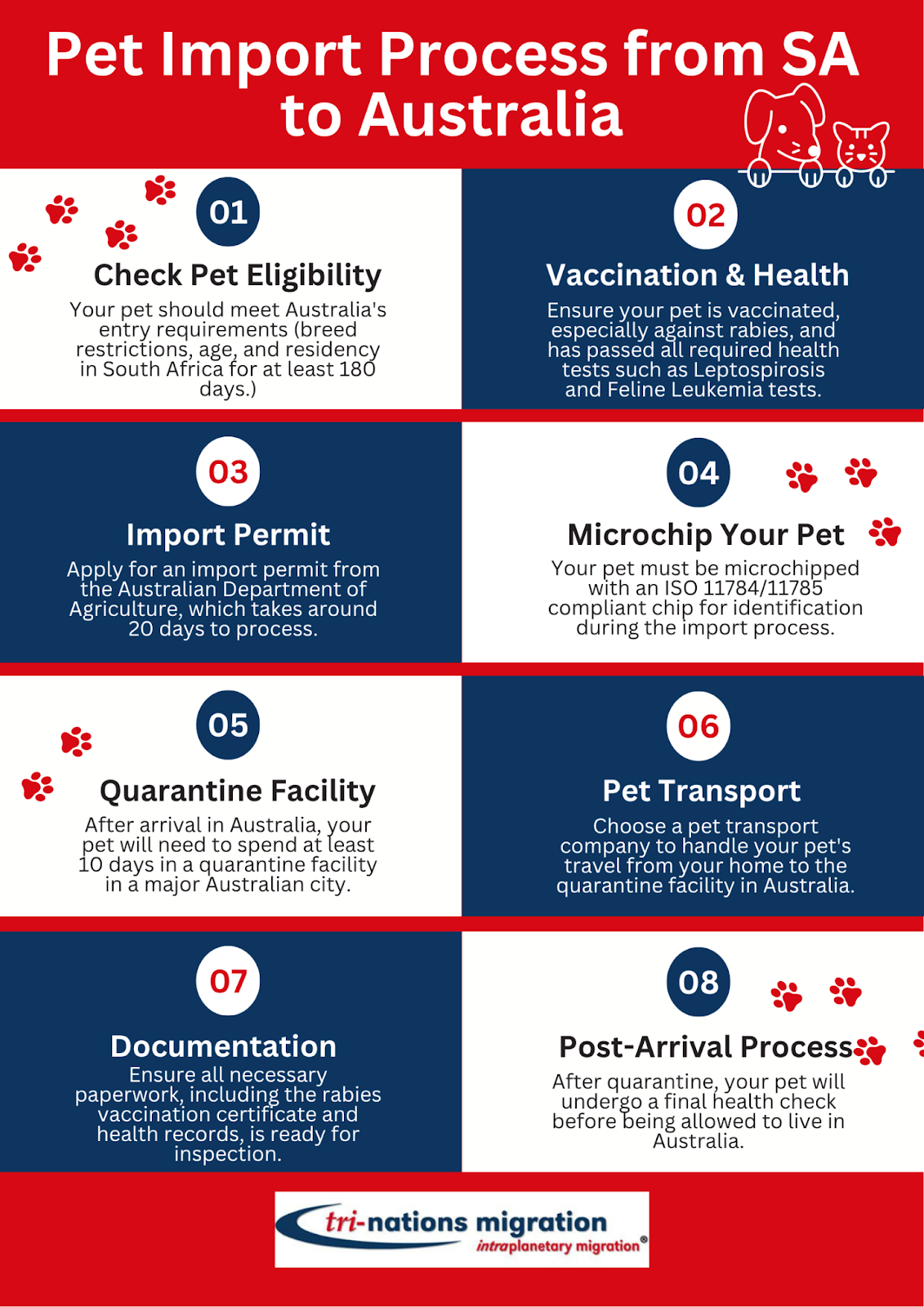
1. Confirm the Eligibility of Your Pet to Enter Australia
To be eligible, your cat or dog:
- is not one of the banned breeds – Pit Bull Terrier, American Pit Bull, Japanese Tosa, Dogo Argentino, or African Wild Cat.
- needs to be a minimum of 12 weeks old – no puppies or kittens. Females cannot be suckling or be more than 30 days pregnant.
- must have been living in South Africa for at least six months before the proposed move.
- must be microchipped.
2. Apply for an Import Permit
Because pet import permit applications take around 20 days to process, apply for it with sufficient time to spare. (Once issued, they are valid for 12 months.)
Apply for the permit from the Australian Department of Agriculture and Water Resources website and double-check for any updated requirements before getting started.
3. Prepare Your Paperwork
Together with the valid import permit, you will also need:
- A vaccination certificate from your vet to confirm that your cat or dog has been immunised against rabies and is up to date with vaccines that control parasites and infectious diseases.
- Results of medical tests for conditions like leptospirosis and brucellosis.
4. Book a Place at a Quarantine Centre
Upon arrival in Australia, your fur babies will have to spend at least 10 days in a quarantine centre in either Sydney, Melbourne, or Perth. Book their spot well in advance.
5. Select a Pet Transportation Service
A pet transportation company collect your pet from your home, drives them to the airport, and transfers them to the quarantine centre in Australia.
Pet transportation companies can also assist you with the items listed above to make sure that everything is on track and ready for departure day.
The Tri-Nations Migration team are the best emigration adviser to provide you with assistance when emigrating to Australia or New Zealand. Contact us to find out more about how we can help you with moving pets from South Africa to Australia.