The Financial Cost of Immigrating to New Zealand

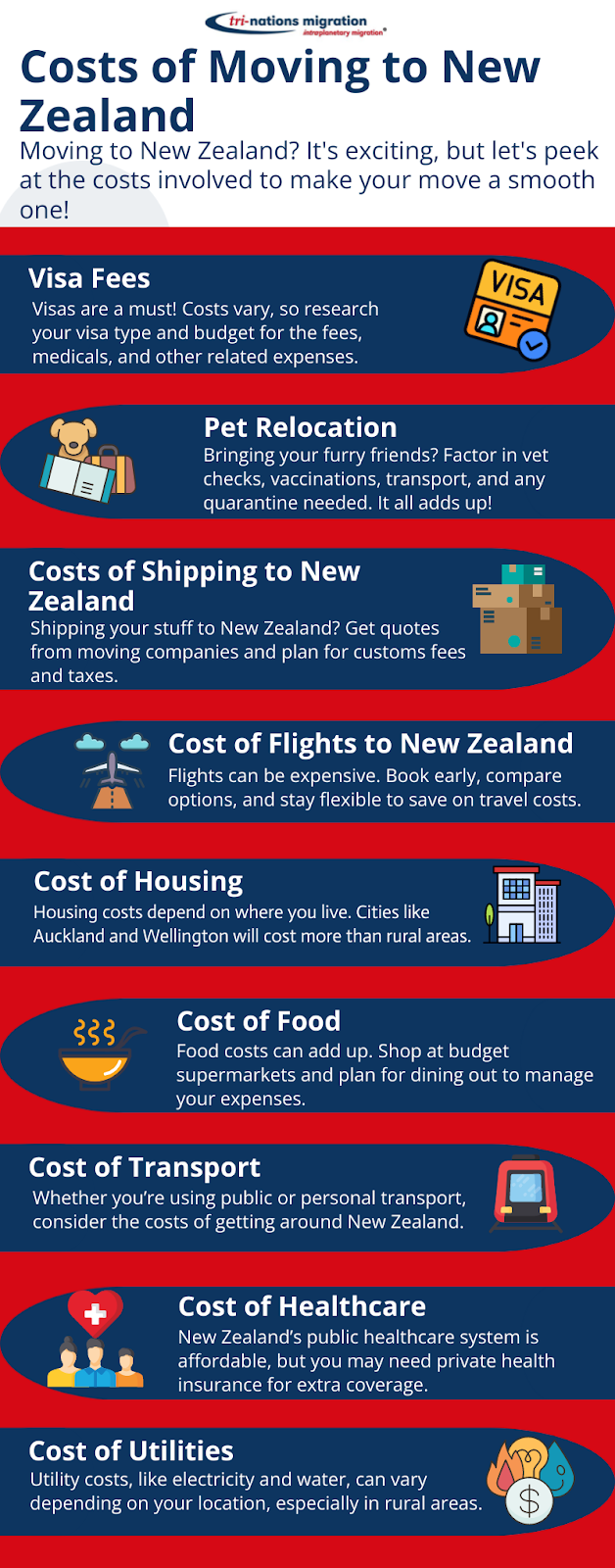
When contemplating the possibility of relocating to New Zealand, it is crucial to understand the financial ramifications associated with undertaking such a substantial life transition. One key consideration is the cost of immigrating to New Zealand as it encompasses many charges, such as visa fees, pet relocation, and hidden costs.
New Zealand Visa Fees
Acquiring a visa is one of the primary financial obligations of immigrating to New Zealand. The fees for visa applications vary greatly depending on your circumstances and the specific type of visa you are requesting. Conducting a thorough study of the various visa alternatives and appropriately allocating funds for application fees, medical examinations, and additional expenses is crucial.
Pet Relocation to New Zealand
Are you planning to bring your cherished pets with you on your trip to New Zealand? The costs of relocating a pet can accumulate rapidly, encompassing bills such as veterinary examinations, immunisations, transportation charges, and quarantine obligations. It is crucial to anticipate and allocate funds for these expenses to guarantee a seamless transition for your beloved pets.
The Costs of Shipping to New Zealand
If you intend to transport your possessions to New Zealand, the expenses associated with shipping can be substantial. When transporting furniture, household goods, or automobiles, getting quotations from reputable shipping companies and allocating funds properly is crucial. In addition, it is essential to consider variables such as customs charges and taxes, as these can affect the total expense of shipping to New Zealand.
The Cost of Flights to New Zealand
Travelling to New Zealand by air can be costly, particularly if you are moving with your family. Prioritise conducting thorough research on flight options far ahead of time, considering variables such as travel dates, carriers, and routes, to identify the most economically advantageous choice that suits your requirements. Making reservations in advance and maintaining flexibility with travel dates can save costs when booking flights to New Zealand.
How to Calculate the Cost of Living
When living in New Zealand, it is vital to understand how to accurately calculate the living costs. This involves evaluating various everyday expenses that will impact your budget once you arrive. Careful consideration of each category will help you prepare for a successful transition.
Consider Your Expenses
Start by identifying your primary expenses, which include housing, food, transport, healthcare, and utilities. Each of these will differ based on the city or region where you choose to live, so it’s essential to gather accurate local information to make informed decisions.
Cost of Housing
Housing is one of the largest expenses when relocating to New Zealand. The cost of housing varies significantly depending on whether you decide to rent or purchase property, as well as the location within New Zealand. Larger cities such as Auckland and Wellington tend to have higher housing costs compared to smaller towns and rural areas.
Buying a House or Apartment
If you plan on purchasing a home or apartment, the cost will depend on factors such as location, size, and type of property. In recent years, New Zealand’s property market has seen significant price fluctuations, especially in high-demand areas. It is advisable to research current property prices and, if possible, seek guidance from local real estate professionals. If you are considering purchasing a property, be prepared to obtain a certificate of eligibility or the appropriate documentation for purchase.
Renting a house or an Apartment
Renting is often the preferred option for many newcomers, especially when settling in the country. Rental prices will vary based on location and the type of accommodation. For example, renting in Auckland will typically be more expensive compared to renting in smaller towns. Additionally, the size and condition of the property will influence rent prices. It’s recommended to review current rental listings to get a clear idea of your potential housing expenses.
Cost of Food
Renting is often the preferred option for many newcomers, especially when settling in the country. Rental prices will vary based on location and the type of accommodation. For example, renting in Auckland will typically be more expensive compared to renting in smaller towns. Additionally, the size and condition of the property will influence rent prices. It’s recommended to review current rental listings to get a clear idea of your potential housing expenses.
Cost of Groceries
Groceries in New Zealand, like fresh produce, dairy products, meat, and canned goods, are typically sold in supermarkets or local grocery stores. Regular shopping at budget supermarkets such as New World or Countdown can help you manage costs, but it’s important to plan for weekly or monthly grocery expenditures to account for family size and dietary needs.
Cost of Buying Food from Restaurants
Dining out in New Zealand can also add to your cost of living. On average, eating at a mid-range restaurant may cost between NZD 15-40 per person, while fine dining establishments may charge higher prices. If you frequently dine out, it’s wise to include these expenses in your monthly budget to avoid financial strain.
Cost of Transport
The cost of transport in New Zealand will largely depend on your location, your mode of transportation, and the frequency of travel. Both public transport and personal vehicles have associated costs that should be carefully considered as part of your move.
Using Public Transport
Public transport in New Zealand is generally affordable, especially in major cities like Auckland and Wellington. Options include buses, trains, and ferries. Monthly passes are available and can be an economical choice if you use public transport frequently. The cost will vary based on the distance travelled and the type of transport used.
Using Personal Transport
If you choose to use your own vehicle, be prepared for additional costs such as fuel, insurance, registration, and maintenance. Petrol prices fluctuate, but New Zealand’s fuel costs are generally comparable to other developed countries. Public transport may still be necessary if you live outside the main urban areas.
Cost of Healthcare
New Zealand has a public healthcare system that provides essential services at low or no cost to residents. However, there are still costs involved, especially for non-residents or those who choose to use private healthcare. It is important to consider whether you need private health insurance to cover additional services such as dental care, specialist treatments, and elective surgery.
Cost of Utilities
Utilities, including electricity, water, gas, and internet, are additional ongoing costs to consider when budgeting for your move to New Zealand. Utility costs can vary significantly based on your location, the size of your home, and the type of services used. For instance, electricity prices in rural areas may be higher due to transmission costs, while larger cities often have better access to cheaper service providers. It is advisable to research utility providers in your chosen area to compare prices.
Hidden Expenses of Immigrating to New Zealand
Aside from the obvious expenditures linked to immigrating to New Zealand, concealed expenses may not have been considered. These include establishing a new residence, securing work, covering medical bills, and managing day-to-day living expenses. It is imperative to allocate funds for these concealed expenditures to prevent unforeseen financial shocks upon your arrival in New Zealand.
Tri-Nations Migration is here to offer professional assistance and support as you prepare for your immigration process to New Zealand. Reach out to us now to schedule a consultation and allow us to assist you in confidently managing the financial expenses associated with immigration.
Moving to New Zealand Checklist
The Moving to New Zealand Checklist is a comprehensive guide to help you plan and manage the various steps involved in relocating to New Zealand. It includes all the essential tasks and requirements that need to be completed before and after your move.
1. Research Your Visa Options
- Determine the visa type: Whether you are applying for a work visa, student visa, or residency, make sure to check the specific requirements.
- Gather necessary documents: This includes things like a passport, qualifications, and work experience certificates.
- Submit your visa application: Apply through the official New Zealand immigration website or consult a licensed immigration adviser.
2. Secure Employment (if applicable)
- Research job opportunities: Depending on your qualifications and skills, explore job prospects in New Zealand.
- Apply for jobs: Some people secure employment before applying for their work visa, while others do so after arrival.
3. Financial Planning
- Estimate the cost of living: Understand the average living costs in the region you plan to live in, including housing, transportation, and utilities.
- Budget for relocation expenses: Don’t forget to account for costs like visa fees, moving companies, and shipping your belongings to New Zealand.
4. Accommodation Arrangements
- Decide whether to rent or buy: Depending on your budget and long-term plans, either rent an apartment or house initially or purchase property.
- Book temporary accommodation: If needed, book a place to stay upon arrival until you find a permanent home.
5. Prepare Necessary Documentation
- Gather important documents: Ensure you have all necessary paperwork, such as birth certificates, marriage certificates, medical records, and police clearances.
- Verify your qualifications: If you’re seeking employment, make sure your qualifications and skills are recognised in New Zealand (you might need to apply for a certificate from the Ministry of Education).
6. Healthcare and Insurance
- Check eligibility for healthcare: New Zealand has a public healthcare system, but it may be limited for non-residents. Research your healthcare options and consider private health insurance if necessary.
- Get a health check: Depending on your visa type, you may need a health check or medical certificate to prove your fitness.
7. Organise Your Pet Relocation (if applicable)
- Obtain pet travel documentation: Ensure that your pet has all necessary vaccinations and health certificates.
- Book with a reliable pet transport service: Consider using professional services to help move your pet to New Zealand safely.
8. Shipping and Transport
- Get a quote for shipping: Use a reliable international moving company to transport your belongings, including furniture, personal items, and vehicles.
- Secure a container for shipping: Choose the best option for your belongings and determine whether you’ll be shipping by sea or air.
9. Plan Your Finances in New Zealand
- Open a bank account: Research banking options in New Zealand and open an account before or after you arrive.
- Transfer funds: Arrange for money transfers from your home country to your New Zealand bank account.
- Plan your tax responsibilities: Understand your tax obligations as a resident or non-resident.
10. Learn About New Zealand Culture and Lifestyle
- Research the local culture: Understand the Kiwi way of life, including customs, work culture, and social etiquette.
- Learn about leisure activities: Familiarise yourself with the country’s landscape, recreational activities, and outdoor pursuits that New Zealand is famous for, such as hiking and beach outings.
11. Settle and Get Involved
- Register with the Ministry of Social Development (MSD): If you’re moving permanently, you may need to register for services and gain access to social benefits.
- Network with locals: Build a social network through online communities or expat groups to help you adjust.
- Find a local doctor and healthcare providers: Choose a healthcare provider that suits your needs.
12. Post-Arrival Tasks
- Apply for a New Zealand citizen or resident card (if applicable).
- Register for school: If you have children, look into local schools and apply for enrollment.
- Set up utilities: Set up water, electricity, gas, and internet connections in your new home.
13. Long-Term Considerations
- Explore job opportunities: Keep an eye on job opportunities for career growth and explore sector options in New Zealand.
- Plan for permanent residency: If you plan to stay long-term, familiarise yourself with the process of applying for New Zealand residency or citizenship.
Contact Tri-Nations Migration Today
Tri-Nations Migration is here to offer professional assistance and support as you prepare for your immigration process to New Zealand. Reach out to us now to schedule a consultation and allow us to assist you in confidently managing the financial cost of immigrating to New Zealand.